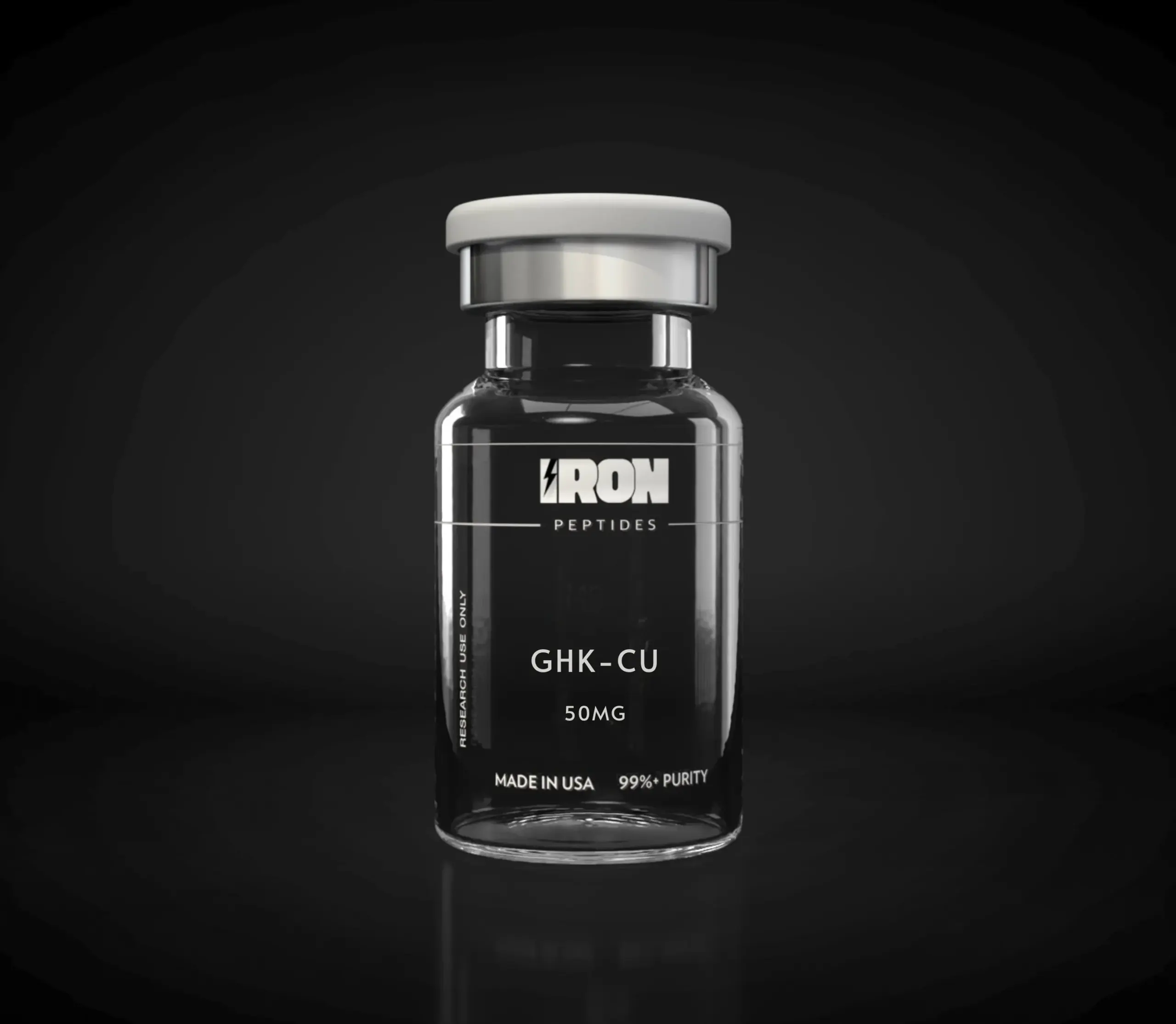
GHK-Cu
$74.99 – $109.99Price range: $74.99 through $109.99
Shipping Calculated at checkout.
FREE SHIPPING
99%+ PURITY
MADE IN USA
Vial
- Mazdutide 10MG
- AICAR 50MG
- Lipo-C 10ML
- Survodutide 10MG
- LC-526 Metabolic Complex
- SSJ-9 Amino Matrix
- Epitalon
- L-Carnitine 600MG / 10ML
- Cerebrolysin 60MG
- Oxytocin 5mg
- SELANK
- 5-Amino-1MQ
- VIP
- L-Glutathione 1500MG
- Acetic Acid Solution
- HCG 10000iu
- BAC Water 30ML
- BAC Water 10ML
- GLOW 70MG
- IGF-1 LR3 1MG
- Thymalin
- HCG (5000iu)
- Wolverine Stack Peptides – BPC-157 (5mg) / TB-500 (5mg)
- BAC Water 3ML
- Melanotan II (MT-2) 10MG
- SLU-PP-332 (5MG)
- KPV 10MG
- GHK-Cu
- KLOW 80 – GHK-Cu (50mg) / KPV (10mg) / BPC-157 (10mg) / TB500 (10mg)
- Gonadorelin
- L-Glutathione (200MG)
- SEMAX (10MG)
- Cagrilintide (10MG)
- DSIP – Delta Sleep‑Inducing Peptide (5MG)
- RETA GLP-3
- Kisspeptin-10
- Ipamorelin / CJC-1295 No Dac 10mg
- Tirz GLP-2
- L-Glutathione (500mg)
- Pancragen 20 MG
- Prostamax 20 MG
- Livagen 20 MG
- Testagen 20 MG
- CardioCytogen 20 MG
- TB-4
- ARA‑290 10mg
- FOXO4-DRI (D-Retro-Inverso) 10mg
- SS-31 (10MG)
- Tesamorelin (10MG)
- AOD-9604
- IPAMORELIN 10MG
- PT-141 10MG
- NAD+
- TB-500 10MG
- SEMA GLP-1
- MOTS-c 10MG
- CJC-1295 (10MG)
- BPC-157 (10MG)
IRON
- Phenibut (60 capsules)
- NAD+ 500MG Spray
- Mazdutide 10MG
- AICAR 50MG
- Lipo-C 10ML
- Survodutide 10MG
- Methylene Blue 20MG
- 5-Amino-1MQ Capsules 50mg 60 cap
- LC-526 Metabolic Complex
- SSJ-9 Amino Matrix
- MITOCHONDRIAL POWER STACK
- SHRED MATRIX X4
- ANABOLIC SIGNALING MATRIX X3
- L-Carnitine 600MG / 10ML
- Cerebrolysin 60MG
- Oxytocin 5mg
- SELANK
- 5-Amino-1MQ
- VIP
- L-Glutathione 1500MG
- Acetic Acid Solution
- HCG 10000iu
- BAC Water 30ML
- BAC Water 10ML
- GLOW 70MG
- IGF-1 LR3 1MG
- Thymalin
- HCG (5000iu)
- Wolverine Stack Peptides – BPC-157 (5mg) / TB-500 (5mg)
- BAC Water 3ML
- Melanotan II (MT-2) 10MG
- SLU-PP-332 (5MG)
- KPV 10MG
- GHK-Cu
- KLOW 80 – GHK-Cu (50mg) / KPV (10mg) / BPC-157 (10mg) / TB500 (10mg)
- Gonadorelin
- L-Glutathione (200MG)
- SEMAX (10MG)
- Cagrilintide (10MG)
- DSIP – Delta Sleep‑Inducing Peptide (5MG)
- RETA GLP-3
- MK-ULTRA (MK-777)
- Kisspeptin-10
- VIP 10MG Spray
- Ipamorelin / CJC-1295 No Dac 10mg
- Tirz GLP-2
- L-Glutathione (500mg)
- N-Acetyl Selank Spray
- N-acetyl Semax Spray
- Adamax Nootropic – Nasal Spray
- Adalank Nootropic Peptide – Nasal Spray
- Pancragen 20 MG
- Prostamax 20 MG
- Livagen 20 MG
- Testagen 20 MG
- CardioCytogen 20 MG
- TB-4
- ARA‑290 10mg
- FOXO4-DRI (D-Retro-Inverso) 10mg
- KPV 250 MCG (60 Capsules)
- SLU-PP-332 (60 capsules, 250MCG)
- SS-31 (10MG)
- Tesamorelin (10MG)
- MK-677 12.5MG (60 capsules)
- AOD-9604
- IPAMORELIN 10MG
- Healing and Repair Research Blend (60 capsules)
- BPC-157 250MCG (60 capsules)
- Tesofensine 500MCG (100 capsules)
- PT-141 10MG
- NAD+
- TB-500 10MG
- SEMA GLP-1
- MOTS-c 10MG
- CJC-1295 (10MG)
- BPC-157 (10MG)


What is GHK-Cu?
Introduction
GHK-Cu is a naturally occurring, low molecular weight copper binding peptide composed of the amino acids glycine, histidine, and lysine. It has a strong affinity for copper ions, forming a stable complex that regulates copper availability within biological systems. This controlled copper binding is essential, as free copper ions can catalyze oxidative reactions that lead to cellular damage. By stabilizing copper in a bioavailable yet non toxic form, GHK-Cu allows researchers to examine copper mediated biological processes without inducing excessive oxidative stress.In laboratory and experimental settings, GHK-Cu functions as an important signaling molecule involved in cellular communication. It has been shown to influence gene expression related to tissue repair, extracellular matrix synthesis, inflammation regulation, and antioxidant defense mechanisms. GHK-Cu also plays a role in modulating cellular responses to injury by supporting fibroblast activity, collagen remodeling, angiogenic signaling, and neuronal survival pathways. Due to these multifunctional properties, GHK-Cu is widely studied for its potential role in tissue repair and remodeling, protection against oxidative damage, and regulation of key cellular signaling pathways.
Chemical Structure of GHK-Cu
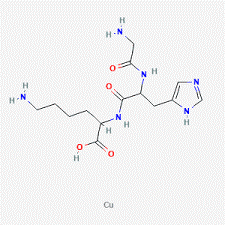
Source: PubChem
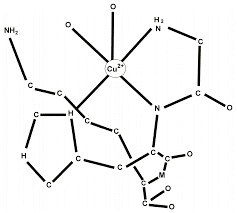
Source: PubMed
| Molecular Formula
|
C₁₄H₂₃CuN₆O₄⁺ |
| Molecular Weight
|
402.92 |
| Monoisotopic Mass
|
402.107675 |
| Polar Surface Area
|
179
|
| Complexity
|
428 |
| Heavy Atom Count
|
25 |
| Hydrogen Bond Donor Count
|
5 |
| Hydrogen Bond Acceptor Count
|
7 |
| Rotatable Bond Count
|
10 |
| PubChem LCSS
|
Prezatide Copper – Laboratory Chemical Safety Summary |
| Identifiers | |
| CID | 71587328 |
| InChI | InChI=1S/C14H24N6O4.Cu/c15-4-2-1-3-10(14(23)24)20-13(22)11(19-12(21)6-16)5-9-7-17-8-18-9;/h7-8,10-11H,1-6,15-16H2,(H,17,18)(H,19,21)(H,20,22)(H,23,24);/q;+2/p-1/t10-,11-;/m0./s1 |
| Isometric SMILES | C1=C(NC=N1)CC@@HNC(=O)CN.[Cu+2] |
| InChIKey
|
NZWIFMYRRCMYMN-ACMTZBLWSA-M
|
| Canonical SMILES | C1=C(NC=N1)CC(C(=O)NC(CCCCN)C(=O)[O-])NC(=O)CN.[Cu+2] |
| IUPAC Name | copper (2S)-6-amino-2-[[(2S)-2-[(2-aminoacetyl)amino]-3-(1H-imidazol-5-yl)propanoyl]amino]hexanoate |

What Are the Effects of GHK-Cu?
- GHK-Cu is a naturally occurring tripeptide that exhibits a remarkably strong biological affinity for copper, thanks to specific binding sites within its molecular structure. This unique ability allows GHK-Cu to tightly regulate copper mediated redox reactions, helping to reduce excessive or unwanted metal induced oxidative activity that can damage cells and tissues. Its copper binding property also contributes to its chemical stability, making it suitable for use in experimental and laboratory procedures. Because of these characteristics, GHK-Cu has become a popular compound for research, particularly in studies focused on enzyme regulation, tissue remodeling, and oxidative stress. Currently, scientists are using it to explore its role in supporting cellular repair processes, protecting tissues from oxidative damage, and modulating extracellular matrix components. These attributes make GHK-Cu highly valuable in the fields of biochemistry and biomedical research.
Mechanism of Action
Mechanistic studies show that GHK-Cu plays a vital role in initiating various complex biological pathways. It has been shown to modulate Transforming Growth Factor-Beta (TGF-β) activity, activate antioxidant response elements, influence integrin signaling, and suppress pro-inflammatory cytokines. Gene expression analyses further indicate that GHK-Cu may affect cellular and tissue functions, extracellular matrix remodeling, redox balance, and neuronal survival. Its copper binding property is particularly important, as it helps limit metal catalyzed oxidative stress, thereby protecting cells from extensive damage and influencing downstream signaling pathways. This combination of features makes GHK-Cu a promising candidate for supporting tissue repair and remodeling, protecting against oxidative stress, and enhancing cellular communication. Following the flow chart clearly explains the mechanism of action of GHK-Cu.
Research Applications
GHK-Cu is commonly used in laboratory and animal-based studies to understand different biological processes. Researchers study how it affects fibroblast movement and function, the production of the extracellular matrix, blood vessel related signaling, immune cell activity, and models of nerve regeneration. It is also examined for its role in managing oxidative stress, interacting with antimicrobial peptides, influencing stem cell signaling pathways, and regulating genes involved in tissue repair and regeneration. All of these studies are carried out strictly in laboratory and preclinical settings and are not intended for clinical or therapeutic use.
In experimental research, GHK-Cu has been extensively studied across multiple in-vitro and in-vivo models to evaluate its biological activity at the cellular and molecular levels. Fibroblast and keratinocyte cell models are among the most commonly used systems to investigate its involvement in tissue maintenance and regenerative processes. Experimental findings indicate that GHK-Cu supports keratinocyte migration while enhancing fibroblast proliferation and metabolic activity. These processes are fundamental to epithelial renewal, structural integrity of tissues, and regulated collagen synthesis within controlled laboratory environments.Neuronal research models have further expanded the scope of GHK-Cu investigations, particularly in studies related to nervous system maintenance and regeneration. In vitro neuronal assays suggest that GHK-Cu contributes to neuronal cell survival under stress conditions and encourages neurite extension, which is critical for neural connectivity. Researchers have also observed protective effects against oxidative challenges in neural cells, making GHK-Cu a compound of interest in experimental neurobiology and neural repair research. Antimicrobial and immune interaction studies have explored how GHK-Cu influences microbial behavior and immune signaling pathways in laboratory settings. These investigations indicate that the peptide can interact with antimicrobial peptides and cellular defense mechanisms, potentially contributing to controlled immune responses during tissue remodeling. Such studies focus on understanding how cellular environments maintain balance when exposed to microbial stressors, particularly during regeneration related processes.In vivo animal models of tissue injury and inflammation have been utilized to assess the broader biological effects of GHK-Cu under preclinical conditions. Research observations from these models suggest that GHK-Cu supports wound closure dynamics, enhances extracellular matrix organization, and contributes to tissue structural recovery. These models allow researchers to study both localized tissue responses and systemic biological effects associated with regenerative signaling pathways. Additional laboratory observations provide further insight into the functional role of GHK-Cu at the cellular level. Consistent increases in cellular migration have been recorded, highlighting its role in coordinated cell movement during tissue restructuring. Enhanced extracellular matrix deposition has also been observed, indicating regulated synthesis and assembly of key structural proteins such as collagen and elastin, which are essential for restoring tissue strength and elasticity in experimental systems. GHK-Cu has also been examined for its influence on inflammatory mediators and cellular stress signaling. In controlled laboratory conditions, it has been shown to modulate inflammatory responses by reducing excessive signaling associated with chronic inflammation models. Furthermore, gene expression analyses reveal changes in pathways linked to oxidative defense, cellular adaptation, and regenerative responses, providing valuable insight into how cells respond to environmental and biochemical stressors during repair processes.It is important to emphasize that all findings related to GHK-Cu are derived exclusively from laboratory based and preclinical research models. These results are intended solely for scientific investigation and mechanistic understanding. GHK-Cu is not approved for human or veterinary use and is supplied strictly for research and experimental purposes only.
References
- Pickart L. The potential of GHK as an anti-aging peptide. BioMed Res Int. 2015;2015:648108.
- Maquart FX, Pickart L, Laurent M, Gillery P, Monboisse JC, Borel JP. Stimulation of matrix metalloproteinase-2 expression in fibroblast cultures by the tripeptide-copper complex GHK-Cu. FEBS Lett. 1993;321(1):7–11.
- Dymek MM, Pickart L, Margolina A. Liposomes as carriers of the GHK-Cu tripeptide. J Drug Target. 2003;11(8–10):463–468.
- Park JR, Kim YH, Kim YH, et al. GHK-Cu ameliorates lipopolysaccharide-induced acute lung injury in mice. Biochem Biophys Res Commun. 2016;478(3):1357–1363.
- Creamer D. GHK-Cu clinical profile: collagen synthesis and matrix metalloproteinase modulation. Delta Peptides Overview; 2019.
- GHK-Cu research review: tissue remodeling and regenerative effects. BioTech Pharma Database; 2020.
- Pickart L, Margolina A. The human tripeptide GHK-Cu in prevention of oxidative stress and aging conditions. PubMed Indexed Article.
- Poly Biotech. GHK-Cu research summary: biochemical properties and cellular regulation. Poly Biotech Database; 2021.
- Amal H, et al. Enhanced angiogenic effects of GHK peptides and Cu²⁺ in extracellular matrix models. PubMed Indexed Article.
- Pickart L, Vasquez-Soltero JM, Margolina A. GHK peptide as a natural modulator of multiple cellular pathways. BioMed Res Int. 2015;2015:648108.
- Pickart L. Stimulation of collagen synthesis by GHK-Cu in fibroblast cultures. J Biomater Sci Polym Ed. 2008;19(8):969–988.
- Hostynek JJ, Maibach HI. Skin regenerative and anti-cancer actions of copper peptides. Cosmetics (Basel). 2018;5(3):45.
- PepCodex Peptide Database. GHK-Cu summary: biological role and research evidence. PepCodex; 2022.
- Peptide Initiative. GHK-Cu research hub: regenerative and signaling studies. Peptide Initiative Database; 2021.
- Polonskaia AS, et al. The role of copper tripeptide (GHK-Cu) in skin regeneration. Pharmateca. 2020;17(2):45–52.
- Wikipedia contributors. Copper peptide GHK-Cu. Wikipedia, The Free Encyclopedia; updated 2024.
- Pickart L, Margolina A. Regenerative and protective actions of GHK-Cu peptide. Int J Mol Sci. 2018;19(7):1987.
- Wang X, Liu B, et al. GHK-Cu liposomes accelerate wound healing by promoting proliferation and angiogenesis. Wound Repair Regen. 2017;25(6):970–980.
- Bobyntsev II, Chernysheva OI, et al. Anxiolytic effects of Gly-His-Lys peptide in experimental models. Neurosci Behav Physiol. 2015;45(3):289–294.
- Pickart L, Vasquez-Soltero JM, Margolina A. GHK and DNA: resetting the human genome to health. BioMed Res Int. 2015;2015:151479.
- Peptide Sciences. GHK-Cu 50 mg copper peptide: product information. Peptide Sciences Official Website. Available from: https://www.peptidesciences.com/ghk-cu-50mg-copper-peptide
- Copper tripeptide-1 (GHK-Cu). National Center for Biotechnology Information; 2024.
- GHK-Cu compound summary (CID: 73587). Available from: https://pubchem.ncbi.nlm.nih.gov/compound/GHK-Cu
- Pickart L, Vasquez-Soltero JM, Margolina A. GHK peptide as a natural modulator of multiple cellular pathways. BioMed Res Int. 2015;2015:648108.
- Pickart L. The human tripeptide GHK and tissue remodeling. J Biomater Sci Polym Ed. 2008;19(8):969–988.
- Siméon A, Emonard H, Hornebeck W, Maquart FX. The tripeptide-copper complex GHK-Cu stimulates extracellular matrix remodeling. J Invest Dermatol. 2000;115(6):962–968.
- Hostynek JJ, Maibach HI. Copper in human skin: role in biological processes. Crit Rev Toxicol. 2003;33(5):473–518.
- National Library of Medicine. Copper tripeptide-1: chemical and biological data. Available from: https://chem.nlm.nih.gov
- International Journal of Cosmetic Science. Copper peptides and skin biology. Int J Cosmet Sci. 2019;41(1):1–10.
BioTech and peptide literature sources cited strictly for biochemical and mechanistic research backgr
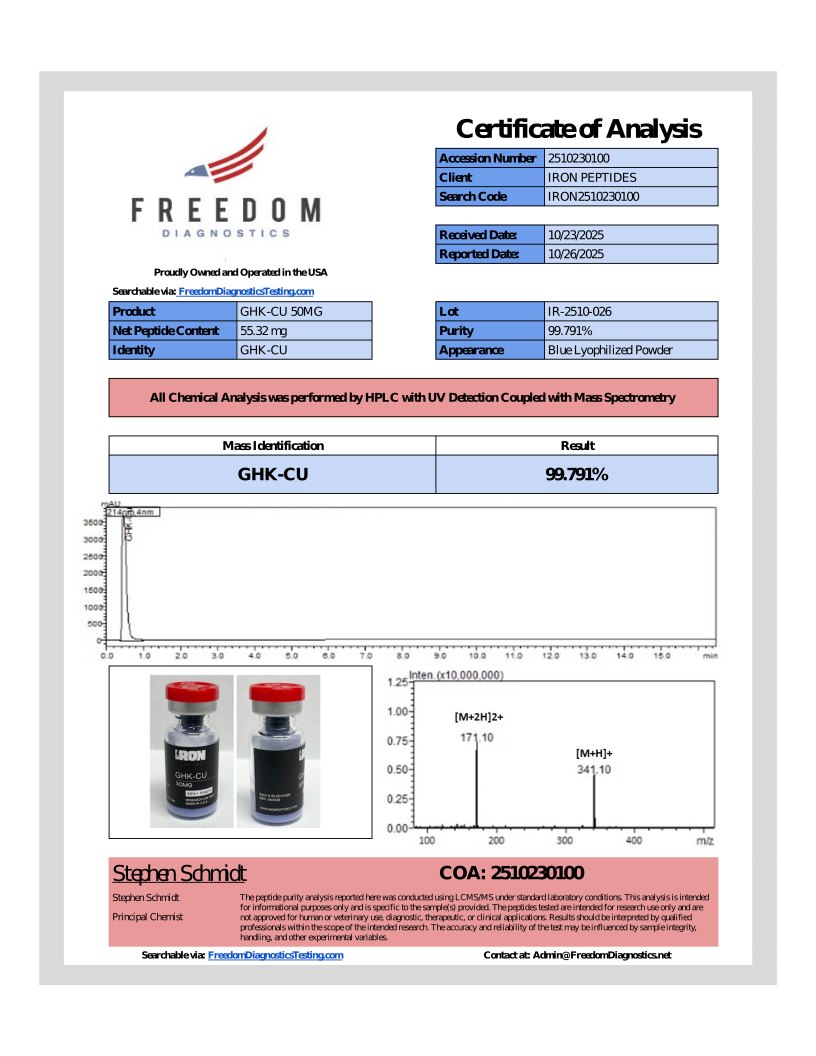
 GHK-Cu
| 5 star | 0% | |
| 4 star | 0% | |
| 3 star | 0% | |
| 2 star | 0% | |
| 1 star | 0% |
Sorry, no reviews match your current selections

TrustScore 4.3

Edgar Guzman
2026-01-20

I have been taking glp3 for a few…
I have been taking glp3 for a few months and I've been losing about 38 close to 40 lb. I feel great. Lots of energy. I definitely recommend iron. It's to me the most trusted legit company customer service It's amazing. They always have discounts. They always have promotions so if you want to see results go with IRON that's for sure
JC
Jcoop
2026-01-16
Amazing service top-notch products
Amazing service top-notch products, I always receive my peptides within a few days of placing my order.
PV
Paola Vargas
2026-01-16
I have try peptides Reta and it’s so…
I have try peptides Reta and it’s so good helping me with better habits and eating well I feel more energy and my progress it’s easier , very focus and the guiadance on usage it’s so good any questions they are there for you . Def recommend
Vial
- Mazdutide 10MG
- AICAR 50MG
- Lipo-C 10ML
- Survodutide 10MG
- LC-526 Metabolic Complex
- SSJ-9 Amino Matrix
- Epitalon
- L-Carnitine 600MG / 10ML
- Cerebrolysin 60MG
- Oxytocin 5mg
- SELANK
- 5-Amino-1MQ
- VIP
- L-Glutathione 1500MG
- Acetic Acid Solution
- HCG 10000iu
- BAC Water 30ML
- BAC Water 10ML
- GLOW 70MG
- IGF-1 LR3 1MG
- Thymalin
- HCG (5000iu)
- Wolverine Stack Peptides – BPC-157 (5mg) / TB-500 (5mg)
- BAC Water 3ML
- Melanotan II (MT-2) 10MG
- SLU-PP-332 (5MG)
- KPV 10MG
- GHK-Cu
- KLOW 80 – GHK-Cu (50mg) / KPV (10mg) / BPC-157 (10mg) / TB500 (10mg)
- Gonadorelin
- L-Glutathione (200MG)
- SEMAX (10MG)
- Cagrilintide (10MG)
- DSIP – Delta Sleep‑Inducing Peptide (5MG)
- RETA GLP-3
- Kisspeptin-10
- Ipamorelin / CJC-1295 No Dac 10mg
- Tirz GLP-2
- L-Glutathione (500mg)
- Pancragen 20 MG
- Prostamax 20 MG
- Livagen 20 MG
- Testagen 20 MG
- CardioCytogen 20 MG
- TB-4
- ARA‑290 10mg
- FOXO4-DRI (D-Retro-Inverso) 10mg
- SS-31 (10MG)
- Tesamorelin (10MG)
- AOD-9604
- IPAMORELIN 10MG
- PT-141 10MG
- NAD+
- TB-500 10MG
- SEMA GLP-1
- MOTS-c 10MG
- CJC-1295 (10MG)
- BPC-157 (10MG)
IRON
- Phenibut (60 capsules)
- NAD+ 500MG Spray
- Mazdutide 10MG
- AICAR 50MG
- Lipo-C 10ML
- Survodutide 10MG
- Methylene Blue 20MG
- 5-Amino-1MQ Capsules 50mg 60 cap
- LC-526 Metabolic Complex
- SSJ-9 Amino Matrix
- MITOCHONDRIAL POWER STACK
- SHRED MATRIX X4
- ANABOLIC SIGNALING MATRIX X3
- L-Carnitine 600MG / 10ML
- Cerebrolysin 60MG
- Oxytocin 5mg
- SELANK
- 5-Amino-1MQ
- VIP
- L-Glutathione 1500MG
- Acetic Acid Solution
- HCG 10000iu
- BAC Water 30ML
- BAC Water 10ML
- GLOW 70MG
- IGF-1 LR3 1MG
- Thymalin
- HCG (5000iu)
- Wolverine Stack Peptides – BPC-157 (5mg) / TB-500 (5mg)
- BAC Water 3ML
- Melanotan II (MT-2) 10MG
- SLU-PP-332 (5MG)
- KPV 10MG
- GHK-Cu
- KLOW 80 – GHK-Cu (50mg) / KPV (10mg) / BPC-157 (10mg) / TB500 (10mg)
- Gonadorelin
- L-Glutathione (200MG)
- SEMAX (10MG)
- Cagrilintide (10MG)
- DSIP – Delta Sleep‑Inducing Peptide (5MG)
- RETA GLP-3
- MK-ULTRA (MK-777)
- Kisspeptin-10
- VIP 10MG Spray
- Ipamorelin / CJC-1295 No Dac 10mg
- Tirz GLP-2
- L-Glutathione (500mg)
- N-Acetyl Selank Spray
- N-acetyl Semax Spray
- Adamax Nootropic – Nasal Spray
- Adalank Nootropic Peptide – Nasal Spray
- Pancragen 20 MG
- Prostamax 20 MG
- Livagen 20 MG
- Testagen 20 MG
- CardioCytogen 20 MG
- TB-4
- ARA‑290 10mg
- FOXO4-DRI (D-Retro-Inverso) 10mg
- KPV 250 MCG (60 Capsules)
- SLU-PP-332 (60 capsules, 250MCG)
- SS-31 (10MG)
- Tesamorelin (10MG)
- MK-677 12.5MG (60 capsules)
- AOD-9604
- IPAMORELIN 10MG
- Healing and Repair Research Blend (60 capsules)
- BPC-157 250MCG (60 capsules)
- Tesofensine 500MCG (100 capsules)
- PT-141 10MG
- NAD+
- TB-500 10MG
- SEMA GLP-1
- MOTS-c 10MG
- CJC-1295 (10MG)
- BPC-157 (10MG)